Address
304 North Cardinal St.
Dorchester Center, MA 02124
Work Hours
Monday to Friday: 7AM - 7PM
Weekend: 10AM - 5PM

Address
304 North Cardinal St.
Dorchester Center, MA 02124
Work Hours
Monday to Friday: 7AM - 7PM
Weekend: 10AM - 5PM

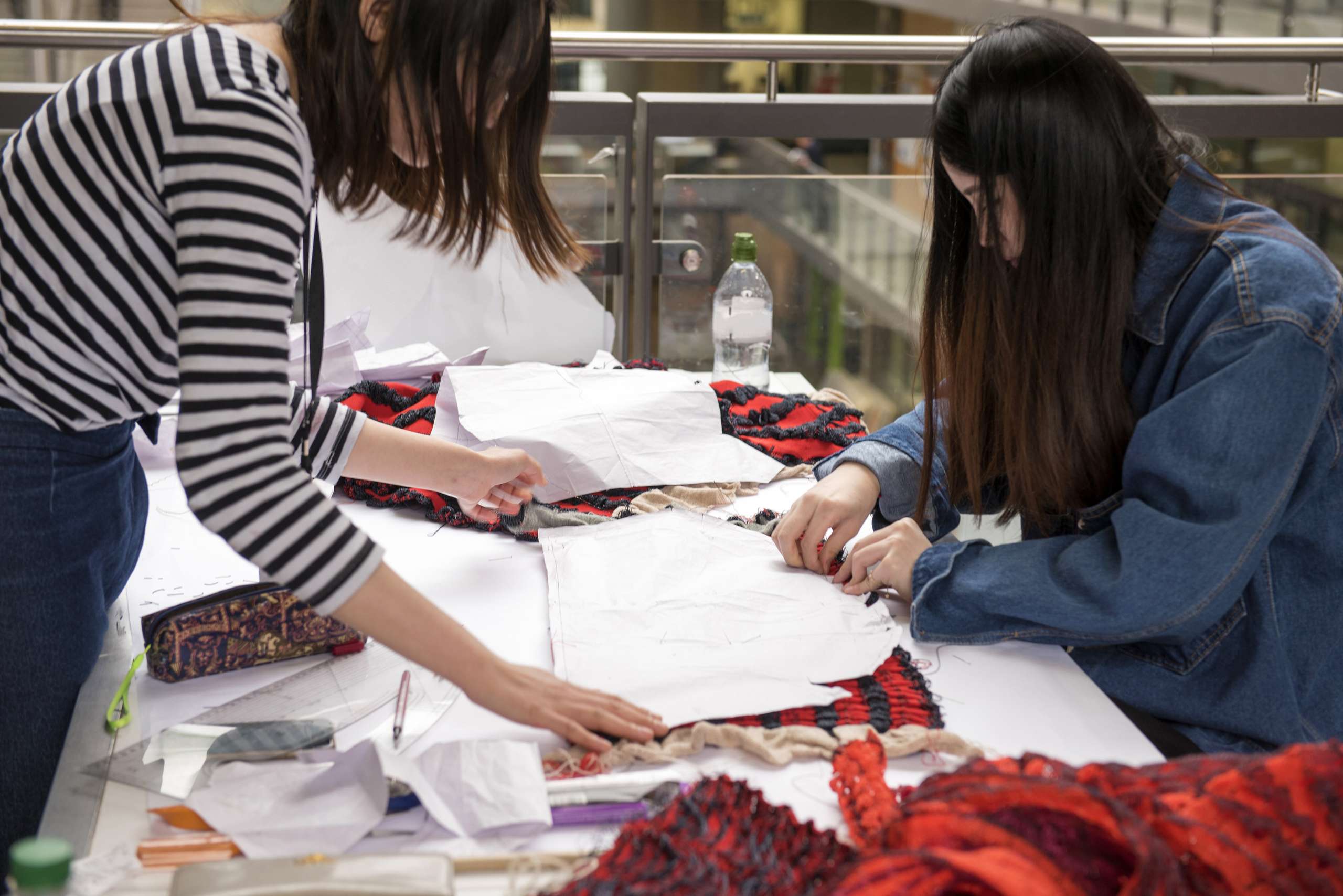
For some, a design begins with a pencil and paper. While that’s a good way to start, a lot can be learned from the fabric itself. Draping fabric over a dress form, a hanger, or even the back of a chair helps you visualize what a garment will look like, and it helps you see things you can’t with a sketch. Fabric hanging in three dimensions shows you the creases and folds that wouldn’t be visible in a sketch. And working with the fabric itself helps you get a sense of how a garment is created from a flat pattern to a three-dimensional garment.
If you don’t have a dress form, you can practice draping with a square or rectangle of fabric draped over the back of a chair. This will give you an idea of how fabric hangs and how it creates folds and creases. Start with the fabric draped over the back of the chair, and then lift and pin one edge of it to create a fold or a tuck in the fabric. Then, step back and observe how the fabric hangs.
As you drape, it’s easy to try to force the fabric to do what you envision, but it’s better to let the fabric guide your design at first. Force the fabric to do what you want it to do, and you may end up with awkward creases or areas where the fabric will pucker. If the fabric doesn’t want to cooperate, don’t fight it. Just let it drop, then try again.
If you don’t have a lot of time to devote to draping, try setting a timer for 15 minutes. Drape a piece of fabric over a dress form or the back of a chair, and spend a few minutes just observing how it hangs. Then, spend a few minutes pinning the fabric to create a fold or tuck, and observe how it hangs. Take a few minutes to sketch what you see, then reset the fabric and try something different.
With practice, draping will help you see garments in 3D, rather than 2D, and will help you visualize the folds and creases that fabric creates. You’ll start to see garments as garments, rather than as flat sketches, and you’ll be able to anticipate how the fabric will hang and drape on the body. And that will help you as you sketch and create patterns.