Address
304 North Cardinal St.
Dorchester Center, MA 02124
Work Hours
Monday to Friday: 7AM - 7PM
Weekend: 10AM - 5PM

Address
304 North Cardinal St.
Dorchester Center, MA 02124
Work Hours
Monday to Friday: 7AM - 7PM
Weekend: 10AM - 5PM

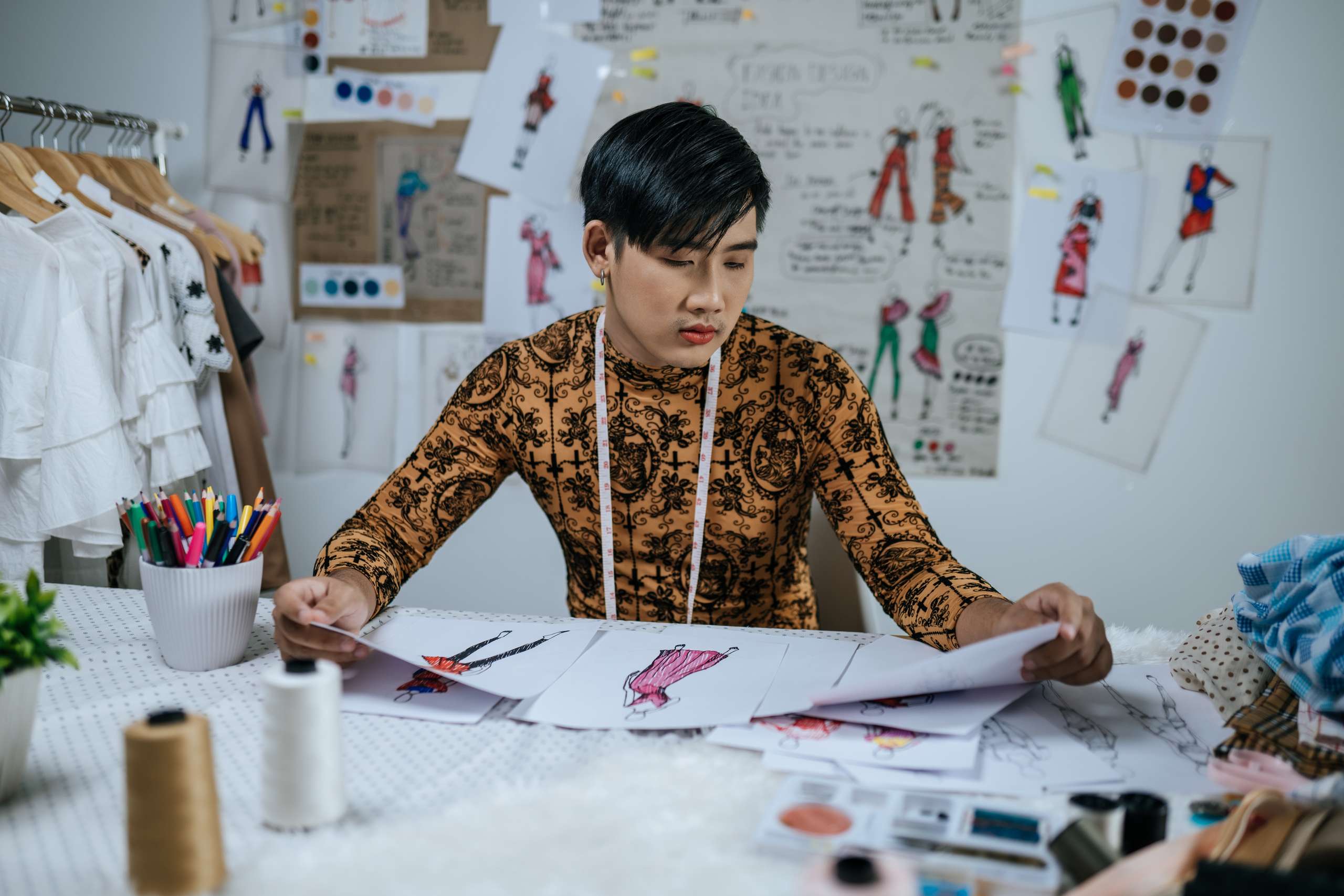
Don’t get me wrong, you need your imagination in order to design garments. But in the beginning, it’s best if you don’t use it to design garments. When you design garments in your head, without looking at real garments, it’s easy to get proportions wrong and not think about construction. Drawing existing garments will help you to become more creative later on. Existing garments show you where sleeves are set, where waistlines fall and how different lengths work. When you observe these things, your drawings will look more realistic instead of like just a pretty drawing with no relation to an actual garment.
One of the best things you can do when you’re a beginner is this: hang a very simple garment like a shirt or a jacket in front of you. Try to draw the shape of it, without caring about the drawing itself. Then try to draw the seams of the garment very lightly into your drawing. Observe where panels meet and where there are seams and where the garment curves (e.g. over the shoulders or hips). You’re not trying to make a pretty drawing, you’re trying to understand how the garment is constructed. When you do this a couple of times with different garments, you will start to see patterns emerge.
One thing I see many beginners do is embellish a garment before they understand the proportions of it. They add buttons or pockets or a collar to their drawing while the underlying garment would not be able to support those. When you draw the construction of a garment first, you don’t have this problem anymore. If you’re not sure where the sleeve should be, just go look at a real garment again. Sometimes, just looking at how the sleeve is attached to the body of a real garment can help you understand how it should be in your drawing as well.
Just 15 minutes a day of observing a garment can help you tremendously. Choose one garment and spend a couple of minutes just looking at it, without drawing anything. Look at the seams, the way it folds, the way the fabric curves as it goes over a body or a shoulder. Then make a quick drawing of the garment by heart. Don’t worry if it’s not perfect. Compare your drawing to the real garment and correct your drawing. Then use the last few minutes of your time to draw the same garment again, now that you have a better understanding of its construction.
Over time, this exercise will teach you to observe the construction of garments, even if you haven’t seen them up close. When you see garments in a store window, or in a photograph or magazine, you will start to see their seams, and you will be able to imagine how they are constructed. The shape of a silhouette will tell you which panels a garment is made of, and where they are seamed. Your creativity will benefit from this because when you design garments based on what you observe in reality, you will be designing garments that could actually exist.